
Severance Pay Calculator
Statutory Severance Pay
Employment Info
Severance Pay
Estimated Severance
—
Years of Service—
Daily Average Wage—
Severance Pay Calculator Guide
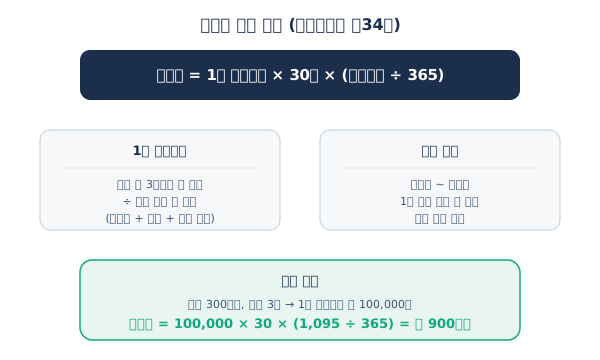
Korean Severance Pay Law (Article 34, Labor Standards Act)
How Daily Average Wage Is Calculated
What Counts as Wages for Severance
Pro-Rata Calculation for Partial Years
How to Use This Calculator
FAQ
How is severance pay calculated?
Severance pay = Daily average wage × 30 days × years of service. The daily average wage is the total salary paid in the 3 months before retirement divided by the total number of days in that period.
What are the eligibility requirements for severance pay?
Severance pay is paid to workers who have worked for 1 year or more when they leave the company. It applies to all workers (regular, contract, part-time) working 15 hours or more per week.
Is severance pay subject to tax?
Yes, retirement income tax applies. The longer your years of service, the larger the deduction and the lower the effective tax rate. The actual tax is calculated using the retirement income tax formula.
What is the difference between severance pay and retirement pension?
Severance pay is received as a lump sum upon retirement, while retirement pensions (DB/DC/IRP) are accumulated during employment and received as a pension or lump sum. Retirement pensions are protected even if the company goes bankrupt.
Are bonuses included in the 3-month average salary?
Yes, all compensation normally paid during the 3 months before retirement is included: base salary, fixed allowances, bonuses (annual bonus × 3/12), and annual leave pay.
Can contract workers receive severance pay?
Yes, if you have worked for 1 year or more and worked 15 hours or more per week, you are entitled to severance pay regardless of employment type. This applies to contract workers, part-timers, and daily workers.
Are there tax benefits for receiving severance pay in an IRP account?
Yes, transferring severance pay to an IRP account reduces retirement income tax by 30%. If you withdraw it as a pension after age 55, only pension income tax (3.3–5.5%) applies, significantly reducing your tax burden.