
Loan Calculator
Calculate Equal & Principal Payment Amounts
Loan Details
Monthly Payment
Equal Payment
—
Loan Amount—
Total Repayment—
Total Interest—
Loan Interest Calculator Guide
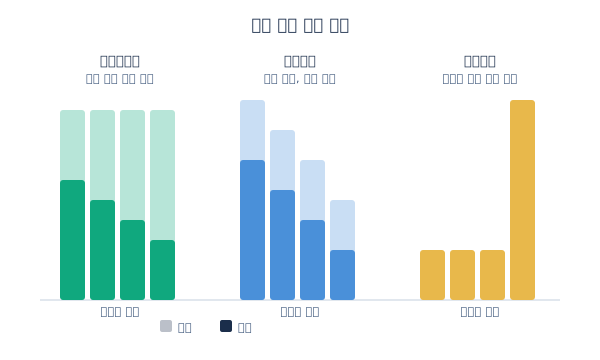
Three Loan Repayment Methods Explained
How Interest Rates Affect Your Loan
Choosing the Right Repayment Method
Understanding Your Amortization Schedule
How to Use This Calculator
FAQ
What is the difference between equal payment and principal reduction?
Equal payment keeps the monthly amount the same throughout the loan, making it easier to budget. Principal reduction pays a fixed principal each month, so early payments are higher but total interest paid is less.
What is a balloon payment loan?
With a balloon payment loan, you pay only interest during the loan term and repay the entire principal at maturity. Monthly payments are lower, but total interest paid is the highest of all methods.
Are there prepayment penalties?
Most banks charge a prepayment penalty of 1.2–1.5% if you repay within 3 years of taking the loan. After 3 years, many banks allow penalty-free prepayment.
Which is better, a fixed or variable rate?
Fixed rates are better in a rising rate environment; variable rates are better when rates are falling. Variable rates start lower but carry the risk of rate increases, while fixed rates are stable but start higher.
Does a longer loan term mean more interest?
Yes, a longer term means more total interest. For example, a ₩300M loan at 4.5% would cost about ₩160M in interest over 20 years, vs. approximately ₩250M over 30 years.
What is loan refinancing?
Refinancing means replacing your existing loan with a new one at a lower interest rate. If the rate difference is 0.5 percentage points or more, it may be worth considering — compare savings against any prepayment penalties.
What is a grace period?
A grace period is an initial phase where you pay only interest without repaying principal. Monthly payments are lower during this period, but once principal repayment begins, payments increase significantly.