
DTI Calculator
Debt-to-Income Ratio (2026 Standards)
Income & Loan Information
DTI Result
—
Monthly Income
—
Total Monthly Payments
—
DTI Calculator Guide
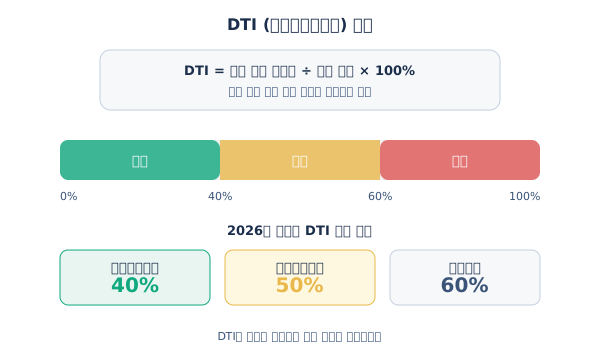
What Is DTI (Debt-to-Income Ratio)?
2026 Regional DTI Limits in Korea
DTI vs DSR: Key Differences
How to Lower Your DTI
How to Use This Calculator
FAQ
What is DTI?
DTI (Debt-to-Income) is the ratio of your annual loan repayments to your annual income. A lower DTI indicates a higher ability to repay debt.
What is the difference between DTI and DSR?
DTI only counts the principal and interest of the mortgage plus interest on other loans, while DSR counts principal and interest on ALL loans — making DSR a stricter standard.
What are the 2026 DTI limits in Korea?
As of 2026, the general DTI limits are: 40% for speculation zones, 50% for adjustment target zones, and 60% for non-regulated areas. Exceptions may apply for first-time homebuyers.
How can I lower my DTI?
You can lower your DTI by increasing your income (combining spouse income, side income), paying off existing debt, or extending your loan term to reduce monthly payments.
Can dual-income couples combine their income?
Yes, DTI can be calculated using combined household income. Adding a spouse's income lowers the DTI ratio, allowing for a higher loan amount.
Are Jeonse (key deposit) loans included in DTI?
Interest payments on Jeonse loans are included in the DTI calculation. However, unlike mortgage loans, the principal portion is often excluded.
Is a loan completely impossible if I exceed the DTI limit?
In principle, loans are restricted when the DTI limit is exceeded. However, exceptions may apply — such as a +10%p allowance for first-time homebuyers or special provisions for newlyweds. Consult your bank for details.