
BMI Calculator
Body Mass Index & Obesity Classification
Body Information
cm
kg
* Asia Pacific (Korean) BMI classification standards applied
BMI Classification (Asia Pacific)
| BMI | Category |
|---|---|
| Under 18.5 | Underweight |
| 18.5 ~ 22.9 | Normal |
| 23.0 ~ 24.9 | Overweight |
| 25.0 ~ 29.9 | Obese Class I |
| 30.0 ~ 34.9 | Obese Class II |
| 35.0 and above | Morbidly Obese |
BMI Result
Awaiting Input—
Body Mass Index (BMI)
—
Standard Weight
—
Normal Weight Range
—
Difference to Normal
—
BMI Calculator Guide
What Is BMI and How Is It Calculated?
Korean BMI Classification Standards
BMI Limitations and Considerations
Health Risks by BMI Category
How to Use This Calculator
FAQ
What is BMI (Body Mass Index)?
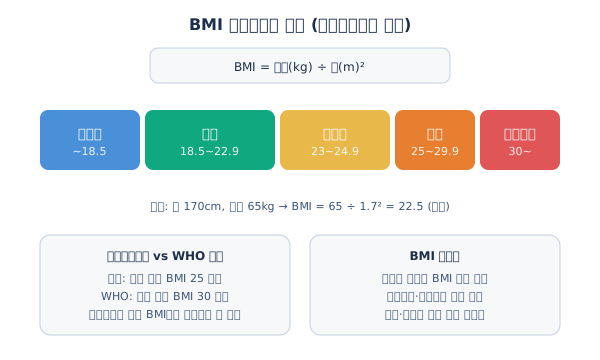
BMI stands for Body Mass Index, calculated by dividing weight (kg) by the square of height (m). It is an international standard metric for simply measuring obesity.
Are BMI standards different between Korea and Western countries?
Yes. Asians tend to have a higher body fat percentage at the same BMI, so separate standards apply. In Korea, normal BMI is 18.5–22.9, overweight is 23–24.9, and obese is 25 and above.
What are the limitations of BMI?
BMI does not account for muscle mass. Athletes or muscular individuals may have a high BMI without being obese. It is best used alongside body fat percentage measurements.
How is standard weight calculated?
Standard weight = height (m)² × 22. For example, a person who is 170 cm tall has a standard weight of 1.7² × 22 ≈ 63.6 kg.
How do I maintain a normal BMI range?
Key factors include a balanced diet (1,800–2,200 kcal/day), at least 150 minutes of moderate aerobic exercise per week, adequate sleep (7–8 hours), and stress management.
Can't I check abdominal obesity with BMI?
Correct. Abdominal obesity is assessed by waist circumference. Men with a waist over 90 cm (35.4 inches) and women over 85 cm (33.5 inches) are considered abdominally obese, even if BMI is normal.
Are BMI standards the same for children?
No. For children and adolescents, BMI is assessed using age- and gender-specific percentiles. The 85th–95th percentile is considered overweight, and 95th percentile or above is obese.